The lost phenomenon of recurring creativity
In our haste to find the answer to the recurring problem, we often forget the beauty of solving it again and again.
Courtesy Rishab Lamichhane
Last month, social analyst Marc Mcrindle proposed the name of the generation to succeed Gen Alpha. The name of this new cohort starting in 2025? You will never guess.
It's Generation Beta.
That's right. Gen Beta succeeds Gen Alpha who succeeded the Gen Zs—the ones that came after Gen Y. And if you forgot about Gen Y, those are the now 30-and-40 somethings born after Gen X.
Before that, we had the Baby Boomers.
The Silent Generation.
The Greatest Generation.
The Lost Generation.
What happened to recurring creativity?
I remember studying the generations in my college sociology class thinking what a cool, bad-ass generation name I could associate myself with as a late Gen-X'er.
The X-files was the big show. And the letter X just had that aura of rebellion that mirrored the grunge music era that we were just weaning off of.
Unbeknownst to us, the generation that was about anti-conformity became the one that began the lazy conformity of naming generations alphabetically starting from the tail-end of the latin alphabet to the beginning of the greek one.
The same thing happened to Super Bowl logos too. Starting with Super Bowl 45 in 2011, they went from colorful and creative art pieces to repeat drab metallic emblems. They finally put color and some mood back into them in recent years, but all follow a similar template as the previous.
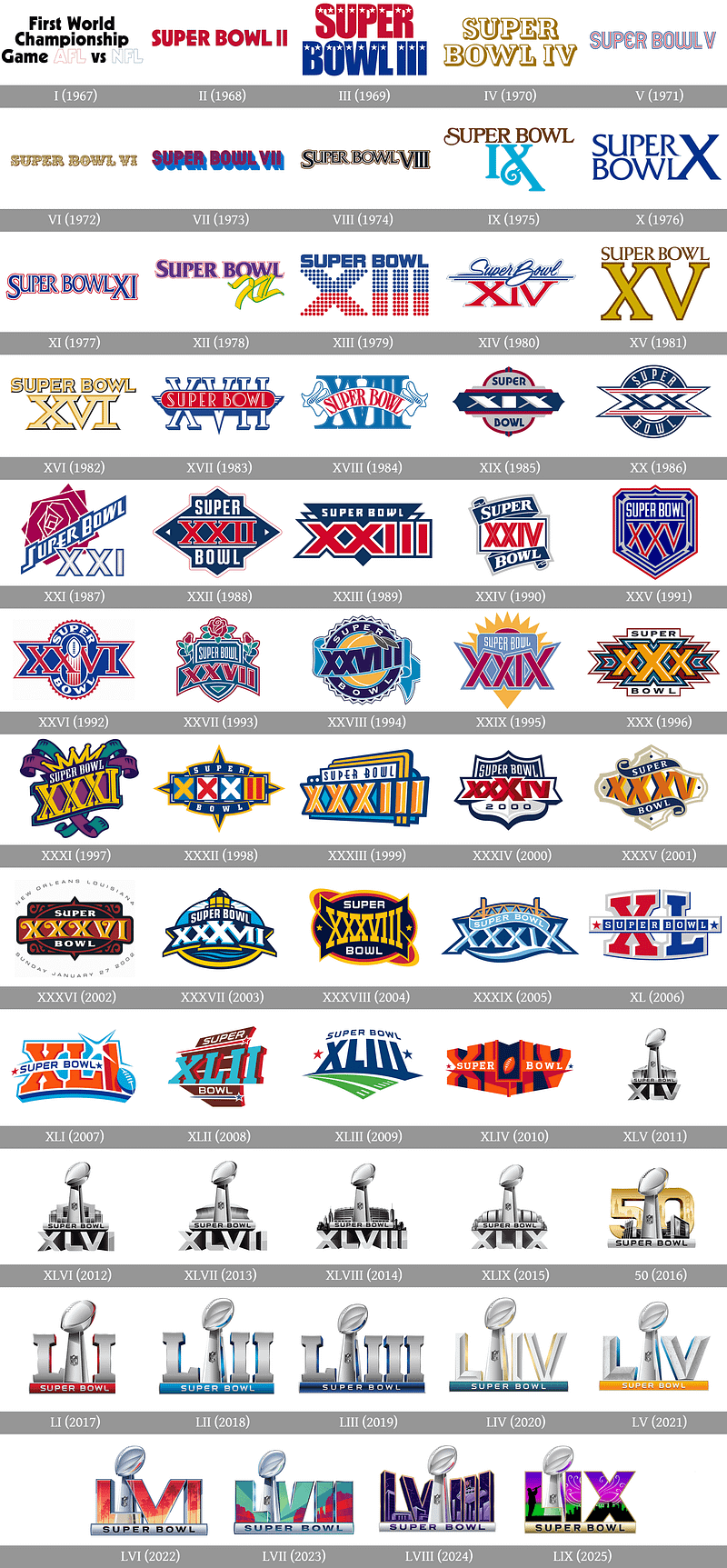
Super Bowl logos got boring after 2010. Courtesy 1000logos.net
And ditto for modern-day lifeless corporate logos, where adding anything more than writing out the name of the company in sans-serif letters feels risky. A canvas of creativity now a scene of starkness.
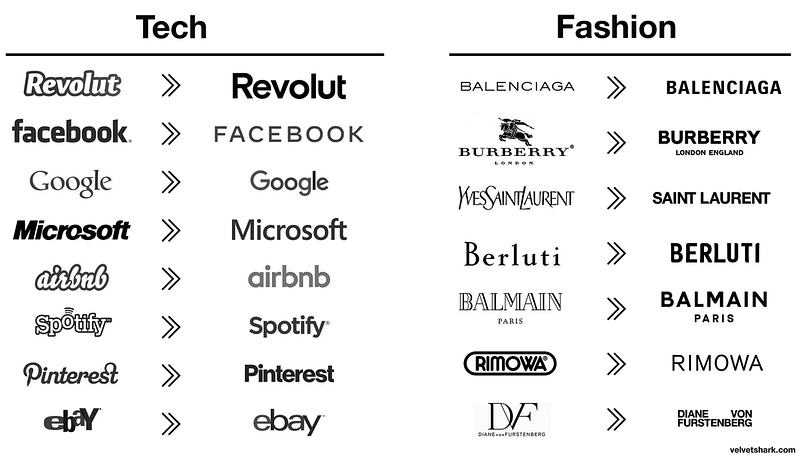
Source: https://x.com/hosun_chung/status/1868449565529223651
Programmers know this phenomenon. One of the things we always look out for are patterns—functionality that repeats itself. It feels like finding the answer to a question you didn't know you were asking for.
And, in some cases, realizing later on you didn't ask for a reason.
Not everything needs to be patternized. In the programming world, realizing this means that we discovered a case where the pattern breaks, and so our decision to extract the uniqueness of each scenario was flawed in some way. We're forced out of a pattern sometimes—perhaps into a less stringent one or no pattern at all.
The design of things or the design of words doesn't have such an obvious tension. The logo won't break. The name won't stop working. The conformity feels good to the creator at first—as all pattern discovery does.
It's a human thing.
A feeling of progress.
Of completion.
A problem solved.
But there is a big loss isn't there? That bit of recurring creativity we deny ourselves. That feeling of starting over each year (or each generation) to discover something for the very first time again. Solving the problem is closing the door on its other wonderful possibilities.
That—also—is a very human thing. A thing that I've begun to cherish more and more as I get older. The freedom to chew on the same problem again and figure out a different, beautiful, and correct answer each time. The comfort of landing somewhere completely different than before but feeling like you're home again.
"OK Boomer", the young folks will say.
Well, I'm Gen-X. But I'm honestly kind of jealous of the name "Boomer."